Description
Violet Stem Taro for Sale — Towering Purple-Black Stems and Giant Dark Leaves for Maximum Pond Margin Drama
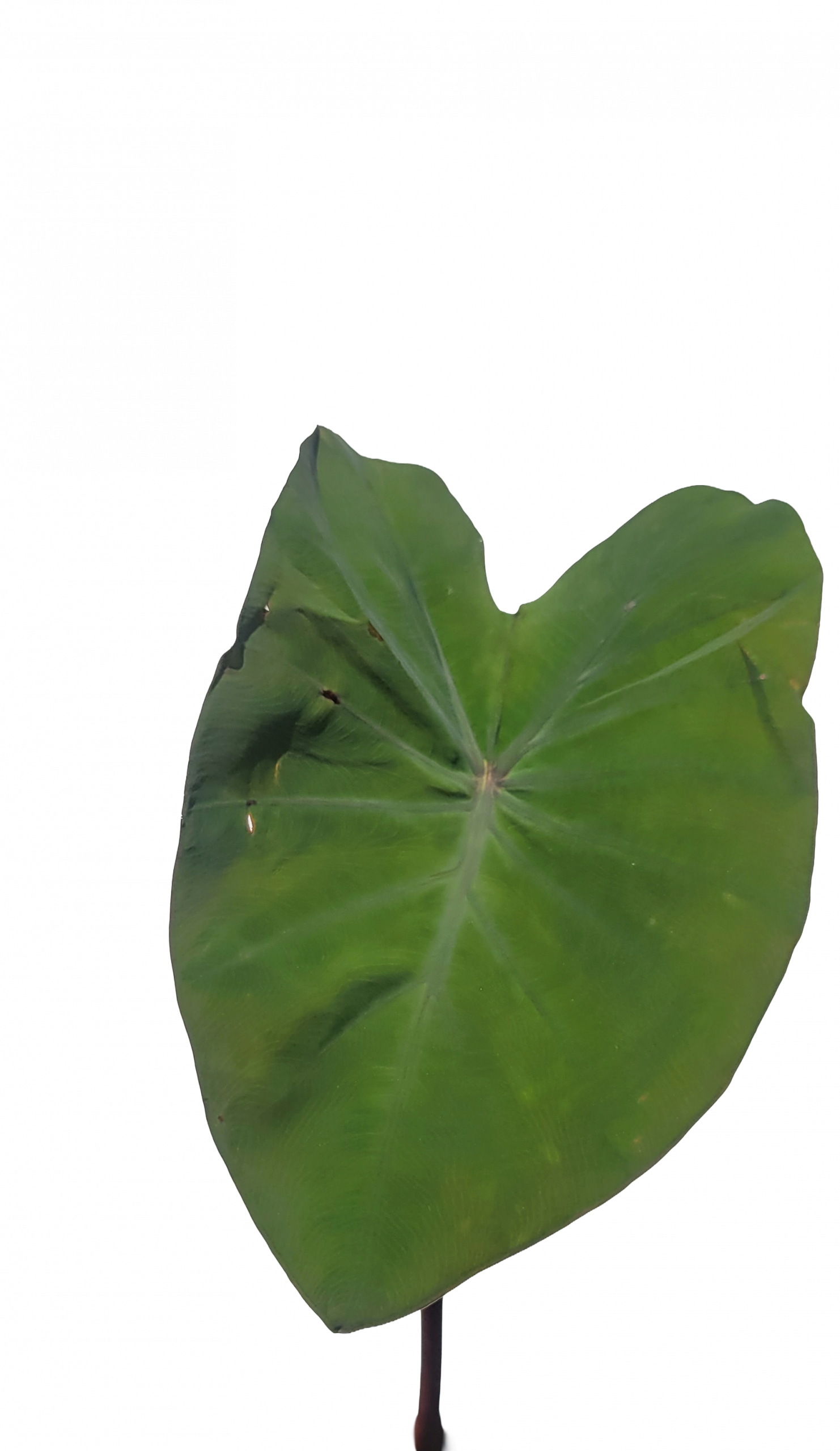
If you’ve been searching for Violet Stem Taro for sale, Quinn’s Fins grows Colocasia esculenta ‘Fontanesii’ right here in our on-site nursery greenhouse. Violet Stem Taro is undoubtedly one of the most spectacular and architecturally dramatic tropical pond marginals in the water garden world. Where standard Green Taro (Colocasia esculenta) delivers impressive size and bold green foliage, Violet Stem Taro takes the genus to a completely different level of visual drama — its giant deep purple-black to violet petioles rise 5 to 7 feet from the crown, each one topped by a massive, heart-shaped dark green leaf up to 3 feet long with a distinctive shiny black cast that catches light with an almost luminous quality. The contrast between the near-black violet stems and the deep glossy green leaves creates a living color tension that makes this plant an unforgettable focal point in any water garden. As a remarkable bonus, in late summer the plant produces 12-inch pale yellow aroid flowers with an extraordinary fragrance of ripe papayas — one of the most unusual and delightful floral surprises in the entire pond plant catalog. Violet Stem Taro for sale at Quinn’s Fins is also notably more cold-hardy than standard Green Taro — performing reliably in Zones 7b–10 versus the standard variety’s Zones 8–11. Ships in a 2″ pot ready to establish.
Why Violet Stem Taro for Sale Is the Most Dramatic Taro for Pond Margins
Violet Stem Taro occupies a completely distinct visual niche from Green Taro — it is not simply a colored-stem variant but a genuinely different and more spectacular plant that delivers maximum tropical impact.
- Giant deep purple-black to violet petioles reaching 5–7 feet — one of the most dramatic stem colors available in any pond marginal plant
- Massive dark green heart-shaped leaves up to 3 feet long with shiny black cast — large scale tropical presence visible from across the garden
- Pale yellow papaya-fragrant aroid flowers in late summer — 12-inch blooms with an extraordinary tropical fragrance
- Spreads via above-ground black rhizomes — unique and visually interesting growth habit unlike most elephant ear varieties
- Zones 7b–10 — notably hardier than standard Green Taro (Zones 8–11); reliably perennial further north
- Full sun to part shade — adaptable to a wider range of light conditions than many large tropical marginals
- Heavy feeder that responds dramatically to fertilization — more nutrients consistently produce larger leaves and taller petioles
- Outstanding specimen plant — scale and color make it a natural standalone centerpiece in any water garden or large container
Violet Stem Taro vs. Green Taro — Key Differences
Quinn’s Fins carries both taro varieties. Here is how they compare:
| Violet Stem Taro ‘Fontanesii’ | Green Taro | |
| Stem Color | Deep purple-black to violet | Green |
| Leaf | Dark green with shiny black cast, up to 3′ | Velvety dark green, up to 24″ |
| Height | 5–7 feet | 2–4 feet |
| Spread | 4–5 feet | Up to 5 feet |
| Flowers | 12″ pale yellow, papaya-fragrant, late summer | Inconspicuous |
| Zones | 7b–10 — hardier | 8–11 |
| Rhizome Spread | Above-ground black rhizomes | Underground |
Browse our Green Taro for the classic green elephant ear pond marginal.
Growing Violet Stem Taro — Care at a Glance
Light and Wind Protection
Violet Stem Taro performs in full sun to part shade — part shade or filtered sun is preferred in very hot, low-humidity climates where intense afternoon sun can scorch the large leaf surfaces. Wind protection is essential — the enormous leaves on tall petioles are highly vulnerable to wind damage and tearing. Site in a sheltered pond position, near taller windbreak plants, or in a protected garden corner for best leaf appearance throughout the season.
Water and Soil
Violet Stem Taro thrives in organically rich, moist to wet soil and tolerates shallow water up to 6 inches over the container. Plant in a 5-gallon or larger container filled with rich loamy aquatic soil — do not use lightweight bagged potting mix as it will cloud pond water. Place on a pond planting shelf with water covering the pot to the desired depth. Violet Stem Taro also performs beautifully in consistently moist garden border soil, bog gardens, and along stream banks.
Fertilization — The Fontanesii Principle
The most important care principle for Violet Stem Taro is the same as for all Colocasia: more water and more nutrients consistently produce taller petioles, larger leaves, and a more spectacular plant. Use aquatic fertilizer tablets pushed into the container soil monthly throughout the growing season. In established fish and koi ponds, the natural bioload provides supplemental nutrition that drives impressive growth.
Papaya-Fragrant Flowers
In late summer, Violet Stem Taro produces 12-inch pale yellow aroid flowers — reminiscent of calla lily blooms — with a distinctive and delightful fragrance of ripe papayas. These flowers are an unexpected and remarkable bonus from a plant grown primarily for its dramatic foliage. The flowers are not always produced in the first season — established plants in warm climates with consistent nutrients and water are most likely to bloom.
Above-Ground Rhizome Spread
Unlike standard Green Taro which spreads via underground rhizomes, Violet Stem Taro ‘Fontanesii’ spreads via distinctive above-ground black rhizomes that run along the soil or water surface. This spread is easily managed — simply cut or remove unwanted rhizomes. Container planting controls spread effectively and simplifies overwintering.
Hardiness and Overwintering
Violet Stem Taro is hardy in Zones 7b–10 — notably more cold-tolerant than standard Green Taro. In Zones 9–10, corms can remain in the ground or pond year-round. In Zones 7b–8, apply a deep mulch layer after frost or move pond containers to a frost-free greenhouse or sunny indoor location. The plant will often resprout from the base even after light frost damage. Below Zone 7b, lift corms after frost, allow to dry briefly, and store in dry peat or wood shavings in a cool, frost-free location at 45–55°F until replanting after last frost in spring.
Toxicity Warning
All parts of Violet Stem Taro are toxic when raw — including corms, leaves, and stems — due to calcium oxalate crystals. Toxic to cats, dogs, and horses. Keep pets away from raw plant material. Fish in pond settings are generally unaffected. When fully cooked, the corms are edible — the same as standard taro.
Invasive Status
Colocasia esculenta is invasive in some US states. Cannot ship to Hawaii. Buyers should verify local aquatic plant regulations. Never allow rhizomes or plant material to escape into natural waterways, wetlands, or drainage systems.
Nursery-Grown at Quinn’s Fins
Every Violet Stem Taro for sale at Quinn’s Fins is grown right here in our on-site nursery greenhouse — not drop-shipped or bulk-sourced. Your plant arrives in a 2″ pot, healthy and ready to establish in your pond margin, bog garden, or container water feature. We grow what we sell.
For more on growing Violet Stem Taro and other taro varieties in ponds and water gardens, visit the Pond Informer’s Taro care guide or browse our full selection of pond and water garden plants at Quinn’s Fins.
Violet Stem Taro Plant Details
| Botanical Name | Colocasia esculenta ‘Fontanesii’ |
| Common Names | Violet Stem Taro, Black Stem Elephant Ear, Violet Stemmed Taro |
| Family | Araceae |
| Native Range | Tropical eastern Asia |
| USDA Hardiness Zones | 7b–10 — hardier than standard Green Taro |
| Height | 5–7 feet (petioles); leaves up to 3 feet long |
| Spread | 4–5 feet |
| Stem Color | Deep purple-black to violet |
| Leaf | Heart-shaped, dark green with shiny black cast |
| Flowers | 12″ pale yellow aroid, papaya-fragrant, late summer |
| Rhizome Type | Above-ground black rhizomes — unique to this variety |
| Light | Full sun to part shade; wind protection essential |
| Water Depth | Moist soil to 6″ over container |
| pH | 5.5–7.0 |
| Fertilization | Heavy feeder — more nutrients = taller petioles and larger leaves |
| Toxicity | Raw parts toxic to cats, dogs, and horses; edible when cooked |
| Cannot Ship To | Hawaii |
| Invasive Status | Verify local regulations before purchasing |
| Pot Size | 2″ |
| SKU | 6119-1 |
| Price | $14.99 |