


Description
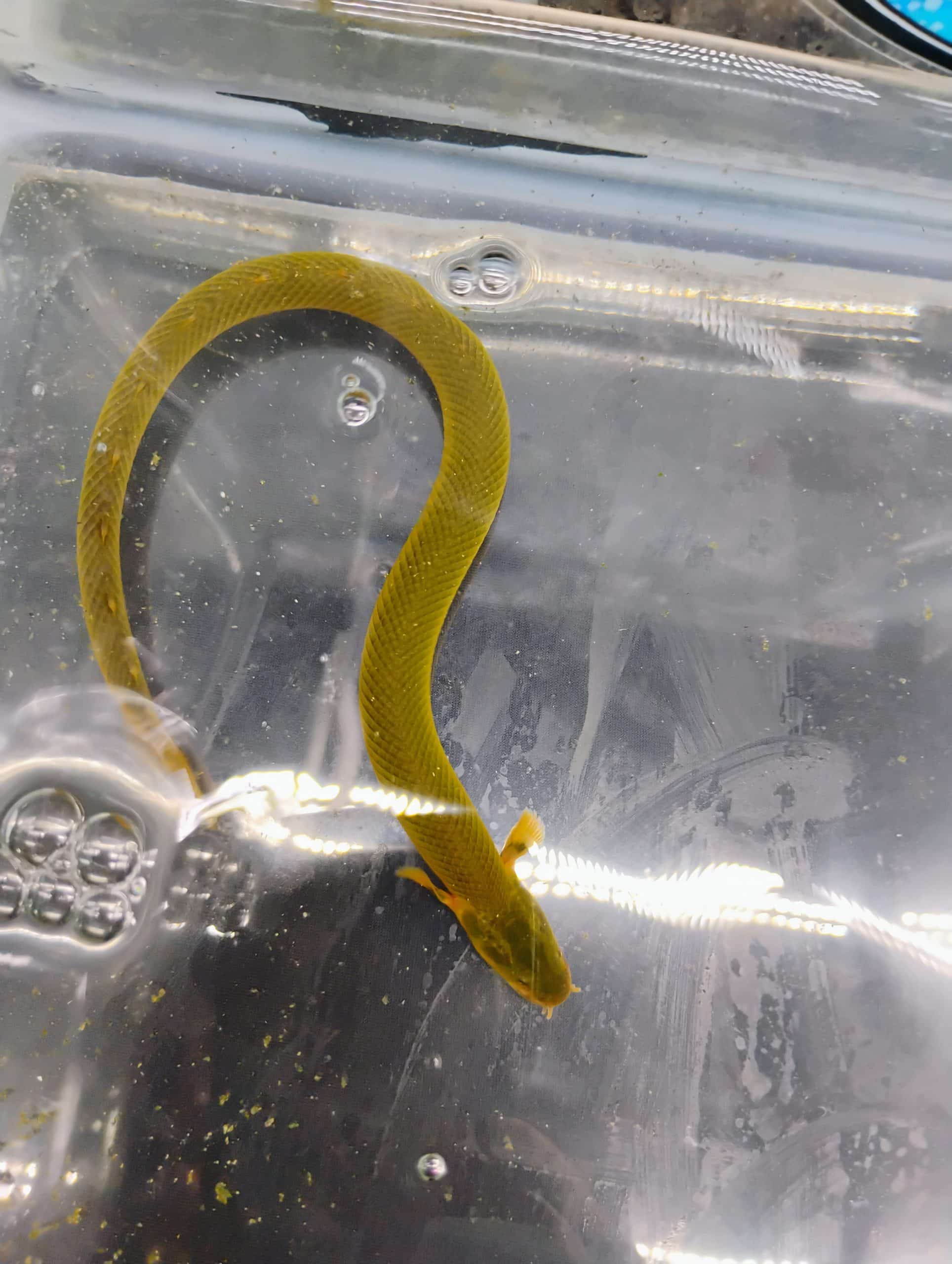
Ropefish for Sale – Erpetoichthys calabaricus (Reedfish)
Experience the unique Ropefish (Erpetoichthys calabaricus), also commonly known as the Reedfish — an elongated freshwater species native to West and Central Africa. Adult ropefish can reach impressive lengths of 18–30 inches in well maintained aquariums. With the proper environment and care, this distinctive species brings character and intrigue to large freshwater systems.
1. Natural Habitat and Behavior
Ropefish inhabit slow-moving or standing tropical freshwater environments, often among reeds, roots, and dense vegetation. They are primarily nocturnal or crepuscular, emerging during lower light conditions to feed. They possess a modified swim-bladder that allows atmospheric air breathing, enabling survival in waters with lower dissolved oxygen.
2. Aquarium Setup
- Tank Size: For an adult ropefish, a minimum of 75 gallons is recommended; even larger tanks (100+ gallons) are preferred for optimal health and swimming space.
- Substrate & Decor: Use fine sand or smooth gravel, and provide hiding spaces using driftwood, roots, and dense plants to encourage natural behavior.
- Water Conditions:
- Temperature: 75–82 °F (24–28 °C)
- pH: 6.5–7.5
- Hardness: 5–20 dGH, stable conditions preferred
- Lid & Surface Access: Ropefish are adept at escaping and need a secure cover. Maintain clear surface access for air breathing. Lowering the water level can help with both.
3. Diet and Feeding
Ropefish are carnivorous and mostly active at dusk or night. In the wild, they feed on worms, crustaceans, insects, and small fish. In aquariums, they thrive on high-quality sinking carnivore pellets, supplemented with frozen or live foods such as bloodworms, earthworms, and small prawns. Feed adults every 1–2 days, offering only what can be consumed within a few minutes.
4. Compatibility with Other Fish
With appropriate setup, ropefish can be kept in community aquariums, but caution is needed. Because of their size and predatory instincts, they may eat smaller fish or invertebrates. Suitable tankmates are medium to large peaceful species; avoid very small schooling fish or shrimp.
5. Common Challenges and Tips
- Escape Risk: Use a tight-fitting lid to prevent escapes.
- Activity & Visibility: Ropefish are most active during low light; provide shaded areas and hiding spots.
- Water Stability: Maintain stable water chemistry and quality for best health.
Conclusion
The Ropefish (Erpetoichthys calabaricus) is a remarkable addition for aquarists seeking a unique focal species with fascinating behavior. With ample space, secure cover, proper diet, and compatible companions, this species thrives and adds a striking presence to your freshwater aquarium.


