Description
Christmas Moss for Sale — Distinctive Triangular Fronds on a Pre-Grown 3″×3″ Mat for Instant Aquascaping
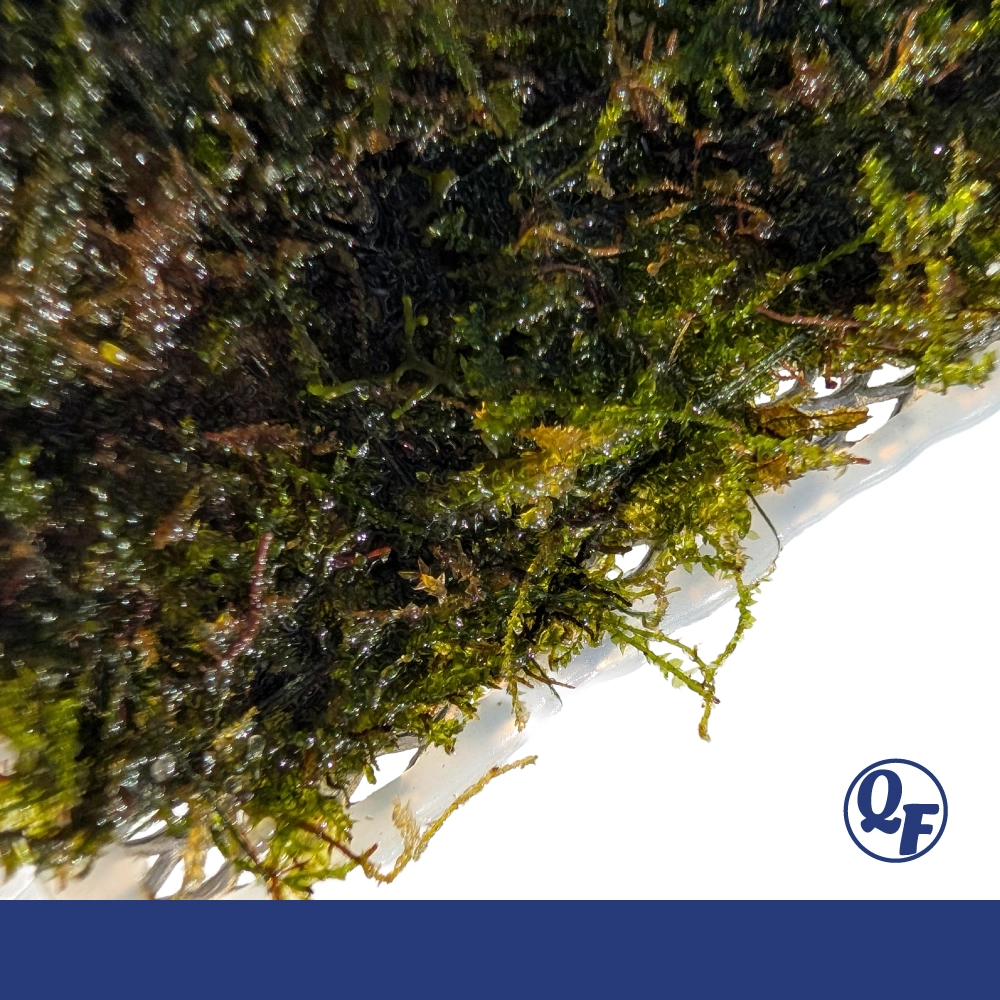
If you’ve been searching for Christmas Moss for sale, Quinn’s Fins offers Vesicularia montagnei pre-grown on a convenient 3″×3″ mat ready for immediate placement in your aquarium, terrarium, or paludarium. Christmas Moss is one of the most beloved and instantly recognizable mosses in the aquascaping world — named for its distinctive growth pattern of flat, triangular, overlapping fronds that genuinely resemble the layered branches of a miniature Christmas or fir tree. Where common Java Moss grows in random, chaotic, bushy clumps, Christmas Moss displays a far more structured, regular branching pattern that looks intentionally arranged even when it has simply been left to grow — making it a longtime favorite among aquascapers who want a fuller, more deliberate-looking moss without the constant shaping effort. Native to the humid tropical regions of Southeast Asia and also found in parts of Australia, Christmas Moss thrives fully submerged in freshwater aquariums and is equally at home in shrimp tanks, nano aquariums, and nature-style aquascapes. The pre-grown 3″×3″ mat format (SKU 6134-1, $10.99) delivers an established, mature patch of moss ready to attach directly to your hardscape — no waiting for small fragments to fill in.
Why Christmas Moss for Sale Is a Favorite Among Aquascapers
Christmas Moss occupies a special place among aquarium mosses — visually distinctive enough to be a deliberate design choice, yet easy enough to care for that it remains accessible to aquarists well outside the high-tech aquascaping world.
- Distinctive flat, triangular, layered fronds — a regular, structured “Christmas tree” branching pattern unlike the chaotic tangle of Java Moss
- Looks intentionally scaped even with minimal effort — fuller and more structured appearance than most common aquarium mosses
- Pre-grown 3″×3″ mat — skip the slow startup period and place an already-established patch directly onto your hardscape
- Versatile aquascaping use — ideal for moss trees, moss walls, driftwood “canopy” coverage, and rock face texture
- Low to medium light tolerant — performs in nearly all lighting conditions; thrives without high-output lighting or CO2
- Excellent shrimp habitat — dense overlapping fronds provide outstanding grazing surface, biofilm production, and hiding cover for shrimp and shrimplets
- Spawning aid for egg-scattering fish — thick moss layers provide a safe medium for eggs to settle and develop protected from predation
- Suitable for aquariums, shrimp tanks, terrariums, paludariums, and vivariums
Growing Christmas Moss — Care at a Glance
Attachment — Never Plant in Substrate
Christmas Moss is an epiphyte with no true root system — never plant it directly into substrate. Attach the mat to driftwood, rocks, or hardscape using a tiny amount of aquarium-safe cyanoacrylate glue, or wrap with thin cotton thread or fishing line until the moss grips the surface on its own — typically within a few weeks. If left unattached and allowed to float or sit loosely, Christmas Moss will grow wilder and begin to resemble Java Moss rather than displaying its signature triangular pattern.
Light — Affects the Signature Pattern
Christmas Moss performs in low to medium lighting, though its distinctive triangular frond pattern is most pronounced and well-defined under moderate light conditions. Under very low light, the moss does not branch as readily and the characteristic Christmas-tree shape becomes less distinct. Under high light without CO2, algae can colonize the moss faster than it can outgrow it — moderate light without excessive intensity is the ideal balance for both healthy growth and the most attractive triangular patterning.
Temperature — Cooler Is Better
Christmas Moss prefers cooler water in the 65–77°F (18–25°C) range. In warmer tanks running 80°F or above, growth slows noticeably and the signature triangular frond pattern becomes less defined and less attractive. If your tank runs on the warmer side, position the moss in an area with good water flow to support gas exchange and partially offset the effects of warmer water.
Building a Moss Tree
Christmas Moss is one of the most popular mosses for creating a “moss tree” — a striking aquascaping centerpiece built by attaching moss to upright branching driftwood (spiderwood is ideal) to mimic a miniature tree canopy. Sandwich sections of the mat between two pieces of fine stainless steel mesh and secure to the branches, or tie directly with thread. Over several weeks the moss grips the wood and fills in to create a convincing miniature tree silhouette — one of the signature aquascaping techniques most associated with this moss species.
Water Parameters
- Temperature: 65–77°F (18–25°C); tolerates up to 82°F with reduced pattern definition
- pH: 5.0–7.5
- CO2: Not required; improves growth density and speed when added
- Light: Low to medium for best results
Trimming and Maintenance
Trim Christmas Moss every 4 to 8 weeks to maintain shape and prevent excessive buildup — it grows slower than Java Moss, so trimming is needed less frequently. Use sharp aquascaping scissors to shape and thin overly thick sections, which can otherwise trap debris and invite algae growth. Remove all trimmed clippings completely from the tank so they don’t drift and colonize unintended areas of the aquascape.
Identifying True Christmas Moss
Java Moss is commonly mislabeled and sold as Christmas Moss in the trade. True Christmas Moss displays flat, triangular fronds with a distinct, regular “Christmas tree” silhouette when individual branches are examined closely. Java Moss grows in random, irregular, bushy clumps without this triangular patterning. Purchasing from a reliable, knowledgeable source is the best way to ensure you receive genuine *Vesicularia montagnei*.
Design Use
Christmas Moss looks especially natural wrapped around driftwood branches to create a mossy canopy effect, or spread across rock faces for a natural river-stone look. It pairs beautifully in shrimp tanks and nano aquariums where its triangular fronds show off shrimp coloration as they climb and graze through the structure. In nature-style aquascapes, Christmas Moss creates the aged, “built-in” texture that distinguishes a mature, established tank from a freshly set up one.
Nursery-Grown at Quinn’s Fins
Every Christmas Moss mat for sale at Quinn’s Fins is grown in our on-site nursery greenhouse — not drop-shipped or bulk-sourced. We grow what we sell.
For more on growing Christmas Moss and other aquarium mosses, visit the 2Hr Aquarist’s aquarium moss care guides or browse our full selection of aquatic plants at Quinn’s Fins.
Christmas Moss Plant Details
| Botanical Name | Vesicularia montagnei |
| Common Names | Christmas Moss, Xmas Moss |
| Family | Hypnaceae |
| Native Range | Southeast Asia; also found in Australia |
| Growth Pattern | Flat, triangular, layered fronds — “Christmas tree” silhouette |
| Height | Approximately 3 cm (1.2 inches); spreads outward more than upward |
| Growth Rate | Slow to moderate — slower than Java Moss |
| Light Requirement | Low to medium — pattern most defined under moderate light |
| CO2 | Not required; improves density and speed when added |
| Temperature | 65–77°F (18–25°C); pattern degrades above 80°F |
| pH | 5.0–7.5 |
| Attachment | Epiphyte — no true roots; tie/glue to hardscape; never bury in substrate |
| Maintenance | Trim every 4–8 weeks to maintain shape |
| Shrimp Safe | Yes — excellent grazing surface and shrimplet refuge |
| Suitable For | Aquariums, shrimp tanks, nano tanks, terrariums, paludariums, vivariums |
| Difficulty | Easy to moderate — slightly more demanding than Java Moss |
| Format | 3″×3″ Mat — pre-grown for instant placement |
| SKU | 6134-1 |
| Price | $10.99 |