Description
Bucephalandra Catherineae for Sale — Iridescent Wavy-Leaf Buce From the Rivers of Borneo
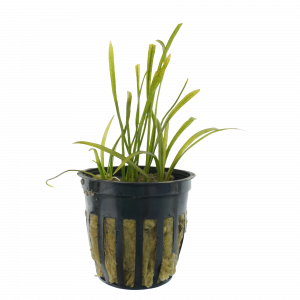
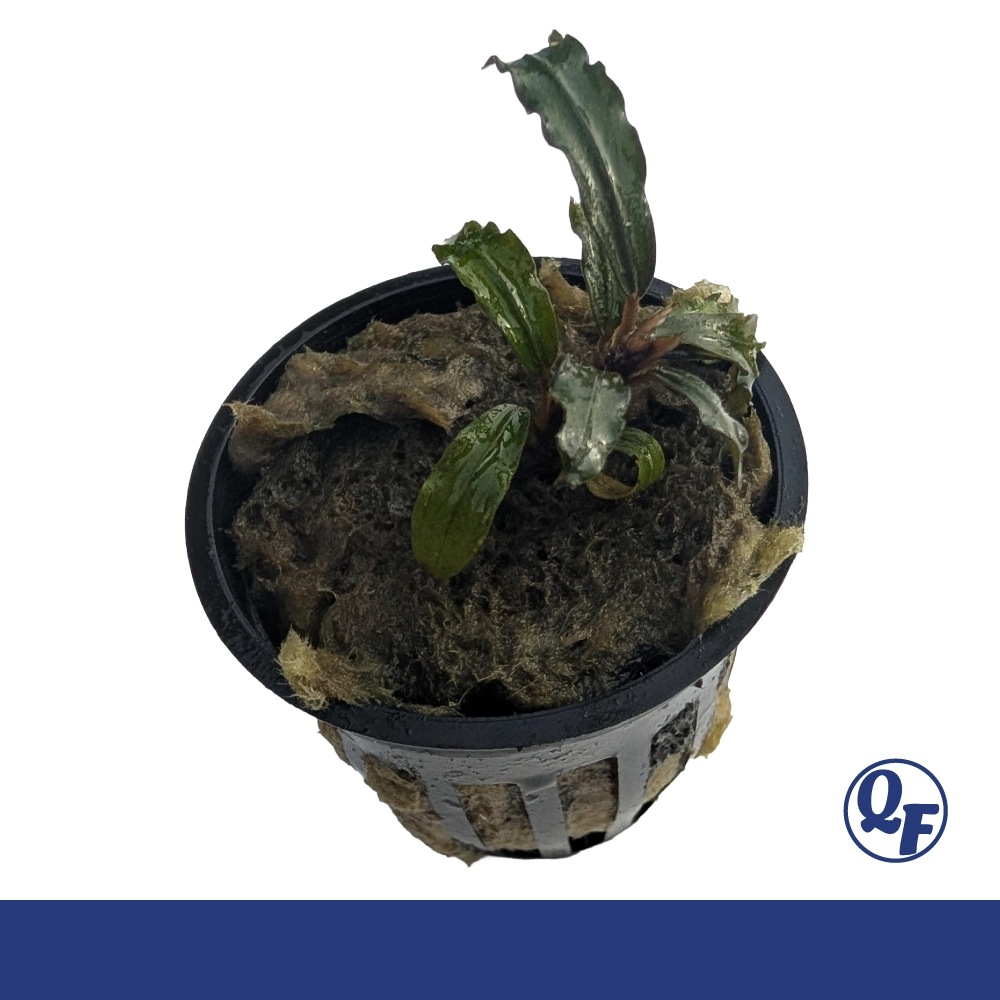
If you’ve been searching for Bucephalandra Catherineae for sale, Quinn’s Fins grows *Bucephalandra* sp. ‘Catherineae’ — also widely traded under the name “Catarina” — right here in our on-site nursery greenhouse. Bucephalandra Catherineae is one of the most captivating species in the entire Bucephalandra genus, native to the rivers and streams of Borneo, Indonesia, where it grows as a rheophyte clinging to rocks in the flood zone of fast-moving water. Its narrow, elongated, linear leaves carry a distinctive curly, wavy margin that gives the entire plant a graceful, flowing silhouette unlike the broader, flatter leaves of standard Anubias or Java Fern. When grown submerged, the leaves develop deep, complex coloration — dark olive-green tones shifting into rich brown-red hues — with an iridescent sheen that catches and reflects light differently depending on the viewing angle, a trait caused by microscopic surface structures rather than pigment. New leaves emerge in a striking light brown-orange before settling into their mature dark coloration, giving every flush of new growth its own small visual event. Bucephalandra Catherineae for sale at Quinn’s Fins is available bare root (SKU 6139-1, $8.99) or in a 2″ pot (SKU 6139-2, $10.99) — both nursery-grown and ready to attach to your hardscape.
Why Bucephalandra Catherineae for Sale Belongs in Any Collector’s Aquascape
Bucephalandra Catherineae delivers the genuine collector appeal that has made the entire Buce genus one of the most sought-after categories in modern aquascaping — exotic coloration, distinctive leaf form, and a slow, deliberate growth habit that rewards patient aquarists with a steadily more impressive specimen.
- Narrow, elongated leaves with distinctive curly, wavy margins — a graceful flowing leaf form unlike broader Anubias or Java Fern leaves
- Iridescent dark olive-green to brown-red coloration underwater — structural color that shifts and shimmers depending on viewing angle
- Striking light brown-orange new growth — every new leaf provides its own visual moment before settling into mature coloration
- Forms a many-headed cluster over time — a single plant gradually develops into an increasingly impressive multi-rhizome specimen
- Low light tolerant — thrives in shaded areas of the aquarium without high-output lighting
- No CO2 injection required — performs well in low-tech setups, though benefits from CO2 with enhanced color and faster growth
- Genuine collector appeal at an accessible price point — the exotic, sought-after Buce aesthetic without the premium cost of rarer trade varieties
- Hardy and forgiving despite its exotic appearance — genuinely beginner-friendly care once basic requirements are understood
Growing Bucephalandra Catherineae — Care at a Glance
Never Bury the Rhizome
Never bury the rhizome — the thick, ascending-tip stem from which all leaves and roots emerge — in substrate. Like Anubias and Java Fern, Bucephalandra is an epiphyte whose rhizome must stay exposed to water flow; a buried rhizome will rot. Attach to rocks, driftwood, or hardscape using a small dab of aquarium-safe cyanoacrylate super glue gel held in place for 10–15 seconds, or wrap with fishing line or thin rubber bands until roots take hold — typically within 2–3 weeks.
Light — Flexible But Color-Dependent
Bucephalandra Catherineae copes well with poor light conditions and can be grown in shaded areas of the aquarium without issue. However, it develops its most beautiful coloration and iridescent sheen under medium lighting with good water current and consistent nutrient and CO2 supply. In very low light, the plant survives but coloration is less vivid. In high light, ensure adequate CO2 and nutrients are present, or the slow-growing leaves become susceptible to algae colonization.
Leaf Melt — Normal on Introduction
Most Bucephalandra is grown emersed (above water) at nurseries — when your new Catherineae is submerged underwater for the first time, some leaf melt is normal as the plant transitions to underwater growth. Do not discard the plant if leaves melt or drop after introduction. Nutrients are primarily stored in the rhizome — as long as the rhizome remains firm and healthy, the plant will produce new shoots and submerged-form leaves within a few weeks. If melting leaves turn mushy and smell bad, that indicates rot rather than normal transition melt — remove affected portions promptly to prevent it from spreading to the rhizome.
Stability — Avoid Sudden Changes
Bucephalandra Catherineae dislikes sudden changes in water parameters, temperature, or lighting intensity — any of these can trigger leaf shedding. Introduce the plant into an already cycled, stable aquarium rather than a newly established tank, and avoid drastic parameter swings once it is settled. As long as the rhizome stays healthy, the plant recovers reliably from stress-induced leaf drop.
Water Parameters
- Temperature: 68–80°F (20–27°C)
- pH: 6.0–7.5
- Hardness: Soft to moderately hard
- Flow: Moderate — Bucephalandra is adapted to flowing water in its native habitat and benefits from good current
CO2 and Fertilization
CO2 injection is not required but accelerates growth and enhances the depth and vibrancy of leaf coloration. Regular liquid fertilizer with iron and micronutrients supports healthy color and growth — nitrogen deficiency causes older leaf yellowing, while iron deficiency causes yellowing between the veins (chlorosis). Bucephalandra is a relatively light feeder overall, but consistency in dosing matters more than quantity for this slow-growing species.
Growth Rate — A Patience Plant
Bucephalandra Catherineae is genuinely slow-growing — expect roughly one new leaf every 2 to 4 weeks in a low-tech setup, slightly faster with CO2 and high light. This is characteristic of the entire Buce genus and is not a sign of poor health. Buy the size specimen you want rather than counting on rapid growth to fill in your aquascape — Bucephalandra rewards patience with a long-lived, increasingly impressive plant rather than quick results.
Propagation
Propagate by dividing the rhizome — cut a section at least 1.5 inches long containing healthy leaves and roots, then attach to new hardscape using the same super glue or fishing line method. Cutting terminal and side shoots also promotes fuller branching and ramification of the parent plant over time.
Two Ways to Buy Bucephalandra Catherineae for Sale at Quinn’s Fins
- Bare Root (SKU 6139-1) — $8.99: A healthy rhizome with leaves and roots, shipped without substrate. Attach directly to your own driftwood or hardscape. Rinse thoroughly before placing in the aquarium.
- 2″ Pot (SKU 6139-2) — $10.99: Nursery-grown in a 2″ pot with established root structure. Remove the plant and all growing media — including any rockwool — before placing in the aquarium. Never put the pot or media in the tank. Attach the rhizome to your chosen hardscape after removal. Rinse thoroughly.
Nursery-Grown at Quinn’s Fins
Every Bucephalandra Catherineae for sale at Quinn’s Fins is grown right here in our on-site nursery greenhouse — not drop-shipped or bulk-sourced. We grow what we sell.
For more on growing Bucephalandra and other aquarium plants, visit the 2Hr Aquarist’s Bucephalandra care guide or browse our full selection of aquatic plants at Quinn’s Fins.
Bucephalandra Catherineae Plant Details
| Botanical Name | Bucephalandra sp. ‘Catherineae’ (cf. B. catherineae P.C.Boyce, Bogner & Mayo) |
| Trade Name | Also sold as “Catarina” |
| Family | Araceae |
| Native Range | Borneo, Indonesia — rheophyte on rocks in stream flood zones |
| Leaf Form | Elongated, linear, curly wavy margin; ~5cm long, 0.7cm wide |
| Leaf Color | Dark olive-green to brown-red, iridescent; new growth light brown-orange |
| Mature Size | ~5cm tall; spreads 18cm+ wide as a multi-headed cluster |
| Growth Rate | Slow to very slow — 1 new leaf every 2–4 weeks |
| Light Requirement | Low to medium — best color under medium light with CO2 |
| CO2 | Not required; enhances growth rate and color when added |
| Temperature | 68–80°F (20–27°C) |
| pH | 6.0–7.5 |
| Flow | Moderate — adapted to flowing water habitats |
| Placement | Foreground to midground; attach to hardscape, never bury rhizome |
| Propagation | Rhizome division — minimum 1.5″ section recommended |
| Difficulty | Easy once established — slow-growing, susceptible to algae if poorly lit/fed |
| Bare Root | SKU 6139-1 — $8.99 |
| 2″ Pot | SKU 6139-2 — $10.99 |